|

Showing posts with label science. Show all posts
Showing posts with label science. Show all posts
20 October 2014
Science


4 February 2014
A Stab At The Future
By Roger Colins

Assuming that we are essentially good people underneath it all, I thought it would be interesting to have a look at what we could accomplish in the next year, ten years or fifty years.
The reason I start off by reminding us of our innate goodness is to say that each day that passes, all things considered, we're doing better than we were yesterday. Some things fall by the way side, mistakes and accidents happen but overall, I would like to think that our forward motion outweighs our back pedalling.
We've always heard the old man hark that the world is going to hell, profits claiming that the world will come to an end on such and such date. I'm feeling optimistic. Maybe because I don't believe everything I read but mostly it's becasue I'm not an optimist at all, I'm a realist.
The world hasn't ended yet.
Saying when the world will end, is just a waste of time and wasting time is definitely going backwards.
Know Your History
From where we were a hundred years ago, some things have changed for the better and some for the worse. War still rages on and for the time being I don't see that changing but so far as world conflict, I'd say we've done well not to start world war three. That's a positive.
A hundred years ago there was also the Great Depression. Even though we've experienced something similar quite recently, the situation has most certainly gotten worse since 1930.
 New diseases will keep cropping up. WHO claims that cancer is on the rise and yet we are curing more of the damn thing everyday and will continue to do so. We're not going to just stop.
Famine has almost certainly gotten worse. Out of the days of empire the indie nations were granted the freedom to starve and left to do so but the technologies that can get charitable aid to them have improved.
Our fantabulous internet lets the world know there's a crisis going on and floods of donations can help save a life or two when it happens. It is still nowhere near ideal but we're getting better at it.
Medicine, technology and food, the sciences are quite simply keeping us all alive and perhaps they can help us in the future to deal with these other challenges that still go unattended.
Ten Years Time
Location. I despise tag lines and try to think up new one's of my own but this one fits. It's important to consider that even ten years ago there were still corners of the world going unadulterated. For the next ten years this will no longer be the case and be an astounding first for civilisation.
Having coloured in the map and connected all the dots we'll have no other choice than to address concerns outside of the scientific sphere, and begin a deliberate effort to bring them into it.
 Communication will have to play the supporting role as the English language spreads even more widely to develop relations where none were possible before.
Two previously incoherent people will be able to sit down together and hash out some plans for the future. The walls that stood between them in the past rather rapidly transform into bridges.
Having filled in the blanks and built our bridges we come to what will happen next and speculate on the worth of our will power. No doubt that in ten, twenty, fifty and more years time there will be new dilemmas and problems to face but we'll have to begin with people, because that's where we will have gotten.
Population
When you consider that there are more people alive than dead, it's quite a harrowing concept to wrap one's noggen around but the claims that over population is a problem, seems brutish.
 At one point there were about forty thousand of us left on the planet, but we managed to carry on. Should there be discovery to cure ageing we may indeed face a brand new incarnation of the monster but until then, we'll still have the earth to till and plenty people to do it.
Housing has to come next. Architects are told that they will always have a job, even if they'll be programming computers to do it for them. There's plenty of space left in the sky, space underground and all around.
While our designers, engineers and labourers may have their work cut out for them, the same rule applies that there's plenty of people to build houses as there are farmers to grow crops.
Over population would probably be more of a concern two hundred years from now but so long as the premise holds for the next twenty to thirty years, we really should have thought up something along the lines of terraforming other planets by then or something else far beyond modern imagination.
Two To Three Decades
Moving onto twenty years from now we'll probably find ourselves addressing the problems humanity has been dealing with for a slightly longer time.
Pollution of the environment we live in probably won't be tolerated by those that sat around the table ten years earlier. The power companies might seed us with the idea that oil is running out today but I can promise you, there's still enough of the juice left to turn the sky black and burn the planet to dust.

Once the idea of eradicating polluting energies has been discussed, it might kick off the idea to stop polluting ourselves as well and by then, we will have the technologies we have now, put into practice.
Thirty years from now the interconnected globe should probably be quite harmonious so far as communication is concerned which would develop, a consensus.
This consensus might just start talking about the even longer standing issues and pick up on the erosion of famine and disease. Most cancers should be curable by now and treatments exist for anything that is not.
Crops and livestock may even have moved out of the fields, through the labs and start being grown in factories and fridges but it's the consensus that will get them to those who need them the most, because food and medicine would become undeniably cheap.
Something Old
If and when that happens, there'll only be one last step to take. The same step that set us all on such a wild path in the first place and the only thing left to do will be to finish off the longest standing issue of all time.
 Currency would have become useless thanks to the mighty dragon slayer of science. Subsequently, war made quite profitless, even for ideologists.
Machines should be busy with all the mining, harvesting, production and delivery providing such efficient services that they might have problems giving their products away.
Speculation on stocks would hit rock bottom and all the bankers, investors and trillionaires start wondering what to do with their time. Some would probably fight back and fight hard for a long, long time but futile it would be.
Fifty to a hundred years from now might see a cold war of science versus money and due to that innate spirit of ours the disease of currency itself become diseased, shrivel up and eventually take it's final resting place in the annals of time.
All of this is most likely hokum. I know that, you know that but that does not mean it is not one possibility. Anything is possible.
#future #hope #spirit
Assuming that we are essentially good people underneath it all, I thought it would be interesting to have a look at what we could accomplish in the next year, ten years or fifty years.
The reason I start off by reminding us of our innate goodness is to say that each day that passes, all things considered, we're doing better than we were yesterday. Some things fall by the way side, mistakes and accidents happen but overall, I would like to think that our forward motion outweighs our back pedalling.
We've always heard the old man hark that the world is going to hell, profits claiming that the world will come to an end on such and such date. I'm feeling optimistic. Maybe because I don't believe everything I read but mostly it's becasue I'm not an optimist at all, I'm a realist.
The world hasn't ended yet.
Saying when the world will end, is just a waste of time and wasting time is definitely going backwards.
Know Your History
From where we were a hundred years ago, some things have changed for the better and some for the worse. War still rages on and for the time being I don't see that changing but so far as world conflict, I'd say we've done well not to start world war three. That's a positive.
A hundred years ago there was also the Great Depression. Even though we've experienced something similar quite recently, the situation has most certainly gotten worse since 1930.
 New diseases will keep cropping up. WHO claims that cancer is on the rise and yet we are curing more of the damn thing everyday and will continue to do so. We're not going to just stop.
Famine has almost certainly gotten worse. Out of the days of empire the indie nations were granted the freedom to starve and left to do so but the technologies that can get charitable aid to them have improved.
Our fantabulous internet lets the world know there's a crisis going on and floods of donations can help save a life or two when it happens. It is still nowhere near ideal but we're getting better at it.
Medicine, technology and food, the sciences are quite simply keeping us all alive and perhaps they can help us in the future to deal with these other challenges that still go unattended.
Ten Years Time
Location. I despise tag lines and try to think up new one's of my own but this one fits. It's important to consider that even ten years ago there were still corners of the world going unadulterated. For the next ten years this will no longer be the case and be an astounding first for civilisation.
Having coloured in the map and connected all the dots we'll have no other choice than to address concerns outside of the scientific sphere, and begin a deliberate effort to bring them into it.
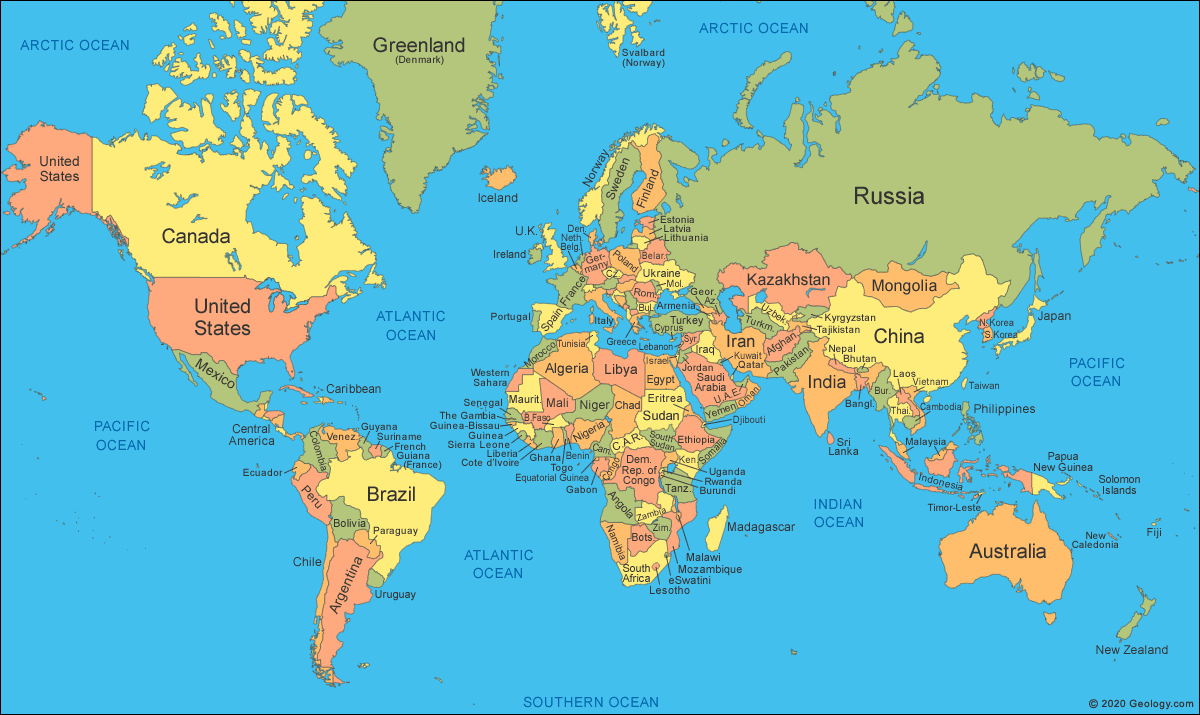 Communication will have to play the supporting role as the English language spreads even more widely to develop relations where none were possible before.
Two previously incoherent people will be able to sit down together and hash out some plans for the future. The walls that stood between them in the past rather rapidly transform into bridges.
Having filled in the blanks and built our bridges we come to what will happen next and speculate on the worth of our will power. No doubt that in ten, twenty, fifty and more years time there will be new dilemmas and problems to face but we'll have to begin with people, because that's where we will have gotten.
Population
When you consider that there are more people alive than dead, it's quite a harrowing concept to wrap one's noggen around but the claims that over population is a problem, seems brutish.

Housing has to come next. Architects are told that they will always have a job, even if they'll be programming computers to do it for them. There's plenty of space left in the sky, space underground and all around.
While our designers, engineers and labourers may have their work cut out for them, the same rule applies that there's plenty of people to build houses as there are farmers to grow crops.
Over population would probably be more of a concern two hundred years from now but so long as the premise holds for the next twenty to thirty years, we really should have thought up something along the lines of terraforming other planets by then or something else far beyond modern imagination.
Two To Three Decades
Moving onto twenty years from now we'll probably find ourselves addressing the problems humanity has been dealing with for a slightly longer time.
Pollution of the environment we live in probably won't be tolerated by those that sat around the table ten years earlier. The power companies might seed us with the idea that oil is running out today but I can promise you, there's still enough of the juice left to turn the sky black and burn the planet to dust.

Once the idea of eradicating polluting energies has been discussed, it might kick off the idea to stop polluting ourselves as well and by then, we will have the technologies we have now, put into practice.
Thirty years from now the interconnected globe should probably be quite harmonious so far as communication is concerned which would develop, a consensus.
This consensus might just start talking about the even longer standing issues and pick up on the erosion of famine and disease. Most cancers should be curable by now and treatments exist for anything that is not.
Crops and livestock may even have moved out of the fields, through the labs and start being grown in factories and fridges but it's the consensus that will get them to those who need them the most, because food and medicine would become undeniably cheap.
Something Old
If and when that happens, there'll only be one last step to take. The same step that set us all on such a wild path in the first place and the only thing left to do will be to finish off the longest standing issue of all time.

Machines should be busy with all the mining, harvesting, production and delivery providing such efficient services that they might have problems giving their products away.
Speculation on stocks would hit rock bottom and all the bankers, investors and trillionaires start wondering what to do with their time. Some would probably fight back and fight hard for a long, long time but futile it would be.
Fifty to a hundred years from now might see a cold war of science versus money and due to that innate spirit of ours the disease of currency itself become diseased, shrivel up and eventually take it's final resting place in the annals of time.
All of this is most likely hokum. I know that, you know that but that does not mean it is not one possibility. Anything is possible.
#future #hope #spirit
28 January 2014
Smoke
By Roger Colins
______________________________________________________________
 We make it, we breathe it, see it and smell it but there's more to smoke than meets the eye. One constituent of smoke is what set off some of our greatest thinkers in history. The coolest thing I ever knew about smoke was something called Brownian motion named after, Robert Brown. Principal discoverer of how a fluid particle flies about with completely random velocity and vector. Einstein backed this up in a paper on a different subject and Jean Perrin followed up on that with one of his own. Both won Nobel prizes for these works. Any one particle displays this random behaviour, simply due to bumping into other surrounding particles when liquid or gas. The different directions and forces of all the crazy snicker snickering results in any one particle showing of, near as dammit, proper randomness. Smoke is a great example.
You will of course need an electron microscope to actually, kind of see it but for just being able to recognise what's going on, smoke definitely works well. Smoke is made up of all the constituent elements that took part in the original combustion. Combustion usually needs oxygen to bond with so you'll get a lot of oxides. The ash you see are mostly metal oxides but of course it depends what you're burning and how hot you're burning it. One tree might leave quite a bit of calcium carbonate in it's ash while another may be nearly all calcium oxide and if you want just carbon, you heat your wood without oxygen. Smoke or Shoot For all the smokers out there, you'll know that the lit cigarette gives off plumes of blue smoke and after respiring, it turns white. Anything small enough to be soaked up by the blood cells get into the body along with everything small enough to get out, carbon dioxide for example. Depending on your tipple, there's probably only one active element that we're looking for in a puff. Smoking must have been one of our all time favourite pastimes since we discovered fire and we must have tried everything before we found the really good stuff. Nowadays all the fun has been sucked out of it thanks to needles. Suffice to say one gets exactly the same effect whether smoking it, shooting up or chowing down. They're just all different ways to get the thing in the blood.
The second is probably opium. Only quite recently was it decided opiates should be banned and though common in Victorian London, the product was not as readily available nor entirely socially accepted. It has of course thrived for centuries in the Far East and spread worldwide in the form of pipes, drips, pills, powders of morphine, herion, codine, oxycodone all with their own alkaloid, strength and delivery method from the poppy. After that, things get fuzzy. You can of course smoke anything that burns, and everything burns, if you add enough heat but here is another chemical we have enjoyed from the benefit of chemists and dealers alike. Methamphetamine is highly popular today, more so than any other active property in recent memory. It is also most commonly smoked to achieve the most satisfactory results however, here we come upon an anomaly. Heroin is traditionally injected whereas it's opium counterpart, usually smoked. Looking at it one way, Heroin or diamorphine is a purer concoction from opium and morphine a purer concoction from heroin so why is one smoked while the others injected? Opium is not refined enough to inject but the others are. So what about methamphetamine? It's the hit. As previously mentioned, the effects of any drug are the same but the net strength depends on purity, delivery and resistance. Addicts are well known to overdose on herion more than any other drug, simply thanks to a lack of resistance over time and the choice method of delivery being one big shot. While less common, it is just as easy to inject methamphetamine as it is heroin. Choosing to shoot up over smoking seems a balance of probability because one chemical is that much more immediate where the other is the same. Given the choice, you'd probably prefer to smoke something instead of dig around for a vein. The King of Smoke Marijuana can be argued as more popular than the rest of our smoking products as well as the most medicinally beneficial. Tobacco just happens to be legal but the active tetra hydro cannabinol in marijuana would probably outsell nicotine ten to one should laws switch tomorrow. Colorado has legalised bits of it, Holland has been smoking it, and everything else for a while now and of course the Caribbean wouldn't be the same without the stuff. Coming in all different shapes and sizes from the home grown plant to new hybrids, we can safely say that out of all the outlawed chemicals we chose to smoke, weed wins.
Never the less, I can briefly recite that a study of Scandinavian origin claimed that prolonged abuse resulted in mental illnesses including but not exclusive to, schizophrenia. I can agree that if you feed the wrong person enough of any chemical he will surly lose his mind but can base no experience of my own or those I have known that could tally with such a finding except, that all the schizophrenics I have met, all smoked weed. Benefits? I also lost an alternative article on the rates of lung cancer in non smokers from about six years ago. The article claiming, that roughly half of all those undergoing lung cancer treatment in the UK were non smokers. Not to say there are no cancer causing properties in cigarettes, I just wouldn't mind a second look at the article. Bearing in mind the different potencies of different tobaccos, there are on average 69 severely toxic chemicals known to cause cancer. These are of course, trace elements out of a list of over four thousand, none of which are particularly friendly but that does not necessarily mean they can't be useful. When we're in the hospital dying of cancer and addicted to morphine, all is well so long as we remember it's addictive. Tobacco is an anti inflammatory and good for irritable bowel syndrome, lowers the chances of getting Alzheimer's, Parkinson's and all kinds of allergies. Medicinal benefits exist in nearly everything, just as the risk of death does also. Smoke currently has a nasty stigma around it. In the UK we've just passed law banning new electronic cigarettes to under 18's and decided not to ban the adverts, in the hope to convert more adults to non smokers than teenagers to smokers, so far as I understand the theory. Either way, it's polluting the environment, annoying people with touchy noses and so on. It was not that long ago when smoking was taboo if one chose not to light up, that we had dedicated rooms to do it in and if I am right, smokers have always been very considerate. There will be the occasional fat cat that likes to annoy an entire restaurant with his Cohiba but on the whole, there wasn't much of a fuss when asked to smoke outside, even though it seemed quite a cruel thing to do. Perhaps there isn't much space left and the olden days are far behind us. Our future is very much ahead of us however and smoking will be with us for many years to come so maybe, one day, we can have our smoking rooms back. | smoke smoking chemistry |


19 January 2014
Anti-Cardinal West
By Roger Colins
The
compass has been the explorer's best friend for two thousand years. The
modern world simply could not have done without it. The Wright brothers
would have ditched in the sea, Drake would have been back in port
before the end of the next day and the Mayflower, a ghost ship long
before it made landfall. All relied on the earth's magnetic field to
point the way. Even train tracks need to know where they're going.
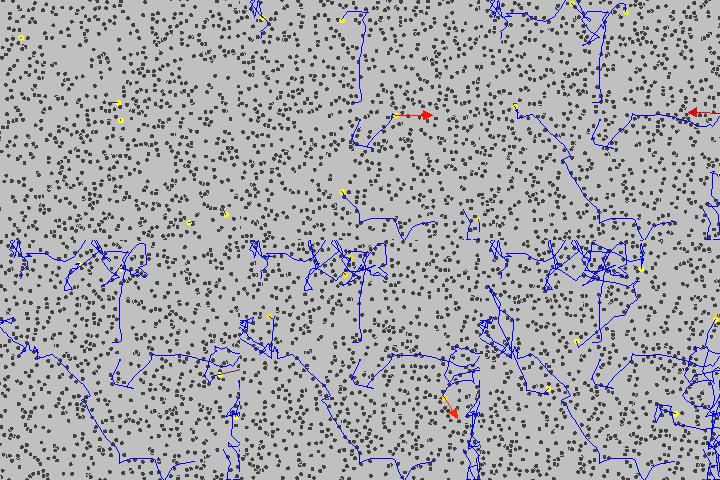
___________________________________________________________ Cardinal points have taken on a few new designations to put you on a map. For North and South there are the Americas and the North Sea. The South Pacific groups together islands of Solomon, Cook, Pitcairn and French Polynesia to name just a few. Mongolia, China, the Koreas and Japan are collectively known as The Far East. From The Philippines and Indonesia up to Bangladesh all form South East Asia, formerly known as the East Indies if you throw in India as well. Then we have the Middle East for everything between India and Turkey. Cut Germany in two, you get East and West Europe. Caribbean islands are all part of The West Indies and The Wild West, a location and historical period in North America but after those, the compass points get fuzzy. Aside from the country of South Africa, the African continent itself gets no distinct cardinal divisions beyond the basic North, East, West and central as they all fall under the collective, The Third World. The same goes for Australasia and Oceania, probably because Australia has a continental mass to itself spanning a gap between South East Asia and the South Pacific. Russia also bridges continents, collectives and compass points though Siberia is exclusively northern. Outside the confines of any one country border, there is no collective South, East or North. There is however, The West and appears to have little to do with cardinal location. It seems the term arose by process of elimination. South America is not considered part of The West. Asia, Africa and Eastern Europe can all be swiftly crossed off but a big question mark dangles over Australia and New Zealand. A suggestion presents itself that The West could have a more historical etymology. Colonial empires found the most success by western European countries such as Spain, France, Portugal, the Dutch and of course Britain. The colonies however include too many that are not part of the west, so far as modern interpretation of the term goes. Having said that, any country that was not a part of European colonization does not fall within the bracket however, they are very few. Perhaps we should at the top and work our way down. The United States comes immediately into view when one mentions The West. The country is the most successful European colony and despite being in North America, sits quite firmly west of the Greenwich meridian. Britain being the principal influence for North American settlers cannot be discounted along with the other western European countries. Spain, Portugal, Italy, Ireland, Scandinavia, Belgium, Austria, Denmark, The Netherlands and Iceland all seem at least partly west but France, Germany and Britain even more so and where does Switzerland lie? There is clearly a difference, the same difference also found between the United States and Canada. So far as economic stability is concerned, all are as equally self sufficient as each other. Political weight might be the difference maker. All four are democratic, enjoying considerable influence across international treaties, communities and organizations. All four nations make up the major players in both world wars and further than that, are the biggest warmongers in history. Here attached we come to interpretations of what is known as The West and the ideas surrounding it's meaning. Some consider The West representative of freedom, liberty, culture, progress and all that is good and true in the world. Others will use the same coinage as a pejorative and the complete opposite. Oppressive, oil hungry, immoral heathens that will stop at nothing to conquer, devour and exploit. Good or bad, the interpretations are all extreme so perhaps The West has more to do with that than anything else. There is an undeniable attachment to money, power and politics. There is always stigma, an uneasy controversy attached to The West but one thing is certain and that is it has nothing whatsoever to do with a compass any more. |
west
geography compass |
18 January 2014
Building Blocks
By Roger Colins
Most of us are aware that sand has something to do with glass, that silica has something to do with sand and that somewhere in between silica has something to do with glass. Let's begin with Gorilla glass as it is fairly new as far as glass goes and you might have a bit of it in your hand. The first, main components of Gorilla glass are; _________________________________________________________________ Alkali-aluminosilicate minerals. - Alkali metals are a small number of chemical elements; barium (Ba), beryllium (Be), calcium (Ca), magnesium (Mg), radium (Ra) and strontium (Sr). Using these metals to swap ions on the surface of glass toughens it, making it more difficult to scratch.
- Aluminosilicate (Al2SiO5) is a mineral composed of; aluminium (Al), silicon dioxide (SiO2) and oxygen (O2). The three are fused together with heat to make, glass. The glass is then put in contact with monovalent ions, heat is again applied in order to swap them for the smaller alkali metal ions in the glass. Chemical Elements
The periodic table is a collection of pure chemical elements. Aluminium is a pure chemical element. Bonding two or more pure chemical elements together produces a compound chemical element such as silicon dioxide; Silicon and Oxygen. Monovalent Ions - Monovalent. Valence is another word for the bonds you see between atoms that hold them together and mono, means one. - Ions. Simply any atom that have a net positive or negative charge because the electrons and protons of the atom are not evenly balanced. Atoms
All the pure chemical elements are representative of a single atom, each with it's own unique atomic number. The atomic number represents the number of protons in it's nucleus (the electrons too, as they have to be the same in number as the protons). If you have two or more atoms conjoined to each other with our valent bonds you have, a molecule. An atom is comprised of electrons surrounding a nucleus which is in turn comprised of protons and neutrons (except Hydrogen-1 which has no neutron); - Electron. An elementary, negatively charged subatomic particle that has about 0.05% the mass of a proton. An electron is a fermion, a grouping for subatomic particles which means it has a specific spin. - Proton. A composite, positively charged subatomic particle made of three quarks. Two up quarks and two down quarks. Protons are also fermions. - Neutron. Also a composite particle made of one up quark and two down quarks. Neutrons are neither positive nor negatively charged and have a mass slightly bigger than a proton. Neutrons fall under the hadron group, the same as protons. Quarks
Another elementary particle, they get together to form hadrons which are composite particles such as neutrons and protons. Quarks are never found on their own, they only ever exist together to form hadrons. There are six types of quarks known lovingly as flavours; -Up. An elementary fermion with the lowest mass of all quarks. Up quarks experience all four fundamental interactions; Gravitation, electromagnetism, weak and strong interactions. -Down. Almost exactly the same as an Up Quark but with a slightly larger mass. -Strange (or S Quark). Heavier still than a down quark. -Charm (or C Quark). Heavier than a strange quark. -Bottom. A Bottom quark is a lot heavier than a charm quark, weighing in at nearly four times the mass of of a proton. -Top. A top quark is appropriately named as it is not only the heaviest quark but the heaviest of all elementary particles. Due to it's enormous mass, top quarks are much used in particle experiments. Fermions and Bosons Fermions include electrons, protons and quarks, all have a half integer spin. Half-integers are half of an odd number of integers and any composite particle made of an odd number, is a fermion. If a particle has a full integer, it is a Boson. All other elementary particles that are not Bosons are Fermions. Bosons are like the glue for the fermions as they can occupy two different quantum states/space at the same time, where Fermions cannot. To ask you to travel any further into the minuscule of Hadrons, Baryons, Mesons and beyond would be asking you to enter a zoo of umbrellas. As you can see there is a lot that goes into making the screen you're looking at and this is just one trifling example of how building blocks are put together. Everything else in the universe works exactly the same way. One brick on top of the other and there is no mystery except what is beyond either end. The make up of subatomic particles yet to be discovered, more complex materials yet to be invented. What is in the middle is sure, physical, chemical, matter. | physics chemistry subatomic_particles glass chemical_elements atoms quarks fermions_and_bosons |



Subscribe to:
Posts (Atom)